Product Overview
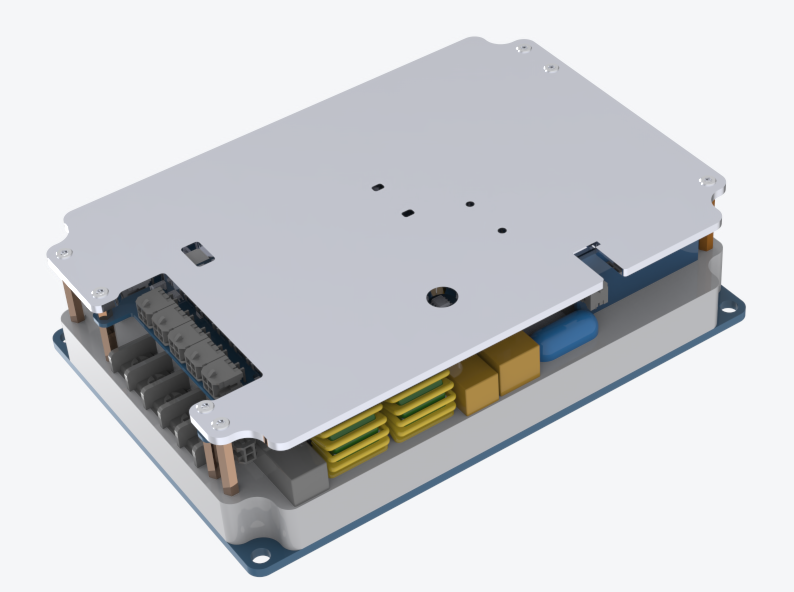
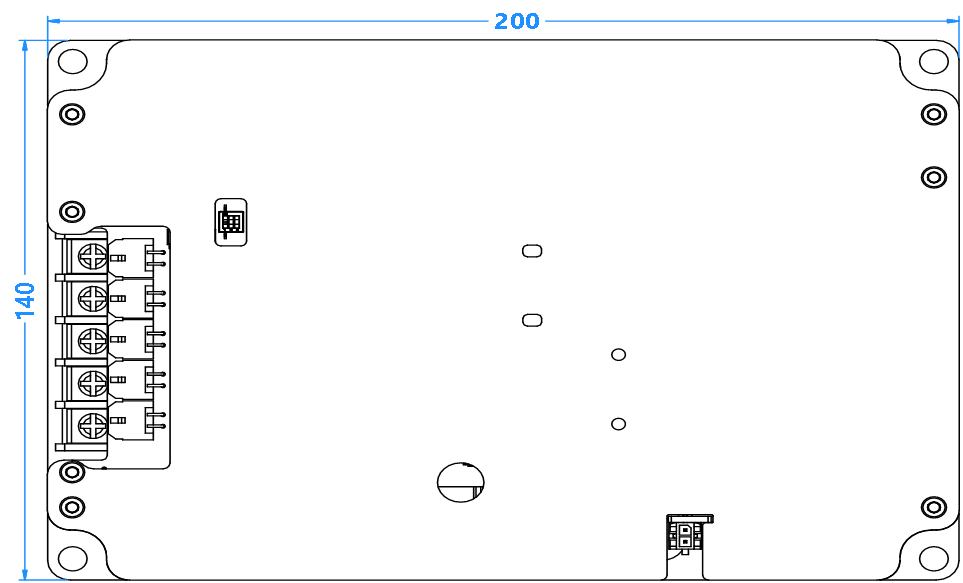
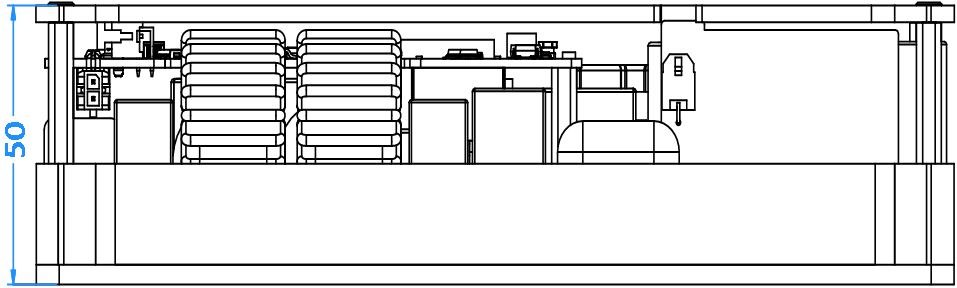
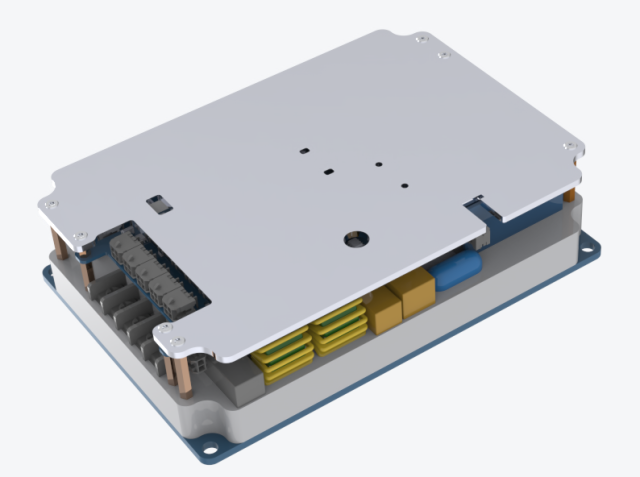
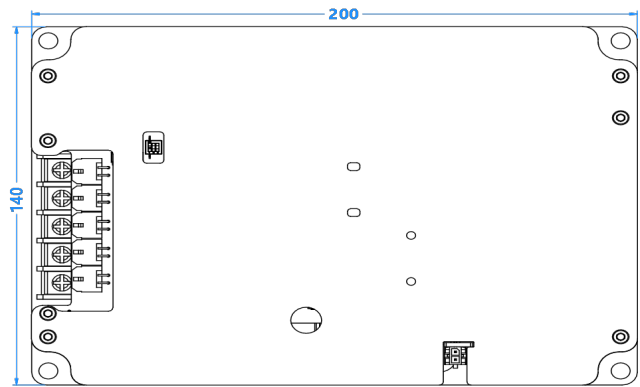
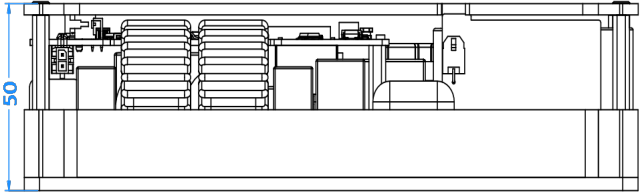
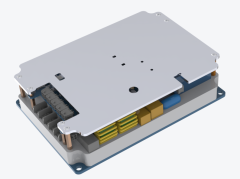
This is a 3.3 kW bidirectional charger module that mounts inside the vehicle rather than on a wall. In the charging direction it works as an ac to dc power supply for the traction pack: single-phase 220 VAC rated, a 90–265 VAC working window, active power factor correction on the front end. In the other direction the same power stage runs in reverse and delivers AC to an external outlet for V2L and V2H functions. Six output variants span 48 VDC to 540 VDC with output currents up to 60 A, so the module is chosen to match the pack rather than the pack being adapted to the charger. It is a design-in part for passenger and commercial vehicle programmes, industrial truck builders and low-voltage platform makers who want charging and vehicle-to-load output from one sealed assembly, commanded over CAN and cooled through its base.
Key Features
- Modular, automotive-grade integrated design – The power stage, the control electronics and the cooling path sit in one assembly, so the vehicle needs one bracket set and one wiring assembly instead of a charger plus an inverter plus the cabling between them. Service becomes a unit swap rather than a board-level repair.
- Full digital control – Voltage and current are managed digitally across the whole operating range, which is how a single platform serves six output variants without six different control boards.
- Active PFC with a wide input window – The front end corrects power factor across a 90–265 VAC range, so the module holds up on nominal 220 VAC supplies and rides through the voltage sag at the end of a long site cable.
- Dual hardware and software protection – A hardware layer acts independently of the microcontroller while the software layer supervises the same conditions with staged recovery, so a fault is caught by whichever layer sees it first.
- CAN communication with bootloader support – The vehicle controller sets charging behaviour over CAN, and the bootloader lets firmware be loaded over that same bus at end of line or in the field without opening a sealed housing.
- Upgradable built-in parameters – Charge profiles, limits and calibration values can be revised after the unit has shipped, so a late specification change does not automatically become a hardware change.
- Bottom heat dissipation with an IP67-rated assembly design – Heat leaves through the base into the vehicle structure, and the way the assembly is built supports an IP67 rating for underbody mounting and washdown duty.
Specifications
| Product code |
LK 1060 |
| Rated output power |
3.3 kW |
| Rated AC input |
220 VAC, single phase |
| AC input range |
90–265 VAC |
| Power factor correction |
Active PFC |
| Control |
Full digital |
| Communication |
CAN, with bootloader support |
| Parameter updates |
Upgradable built-in parameters |
| Cooling |
Bottom heat dissipation |
| Enclosure |
IP67-rated assembly design achievable |
| DC output variants |
Six, 48 VDC to 540 VDC rated |
| Maximum output current |
60 A at 48 VDC |
DC Output Model Selection
- Start from the pack, not the charger – Match the variant to your pack's nominal voltage and its top-of-charge voltage, then check that the current ceiling covers the charge time you need. Each variant behaves as a custom dc power supply tuned to one pack class, so the code you order fixes both the voltage window and the current limit.
- LK1061-02 — 540 VDC rated, 0–720 VDC output, 0–6 A – the top of the range, for high-voltage packs that need the charger to follow them well above the rated point.
- LK1062-02 — 360 VDC rated, 0–500 VDC output, 0–10 A – the middle of the range, and the usual fit for larger passenger and light commercial packs.
- LK1063-02 — 144 VDC rated, 0–200 VDC output, 0–22 A – for compact passenger cars and small four-wheel platforms.
- LK1064-02 — 108 VDC rated, 0–140 VDC output, 0–30 A – for city cars and low-voltage four-wheel vehicles where bay space is tight.
- LK1065-02 — 72 VDC rated, 0–95 VDC output, 0–45 A – for 72 V packs on motorcycles, small four-wheel vehicles and utility platforms.
- LK1066-02 — 48 VDC rated, 0–68 VDC output, 0–60 A – for golf carts, forklifts and other 48 V platforms that need the highest current in the range.
Bidirectional V2L and V2H Operation
V2L and V2H are the same hardware running backwards. When the vehicle is plugged in, the module rectifies AC into DC and regulates it to the pack; when the vehicle is parked and the controller asks for it, the module inverts pack DC back to AC at the outlet. In V2L use that outlet runs tools, lighting, cooking gear or site equipment — the loads that make a van or a work truck useful away from a socket. In V2H use the same output can support a home during an outage, provided the home installation and the vehicle's own controls are set up for it. Because the same bridge runs in both directions, the changeover is handled in firmware and the pack stays under the same supervision whichever way the power flows. The functions are commanded by the vehicle controller, so availability depends on how your system is configured; we confirm that configuration against your architecture before a build is fixed. It is a bidirectional dc charger stage, not a stand-alone inverter, and it is not a grid-tie device.
CAN Communication and Firmware
- The vehicle controller keeps authority – Start, stop, current limit and voltage target arrive over CAN, so the module follows the vehicle's charging strategy instead of imposing a fixed profile of its own.
- The bootloader sits on the same bus – Production firmware, calibration and field updates travel through the CAN connection, so the housing does not have to be opened and the module does not have to come out of the vehicle.
- Built-in parameters stay editable – Charge profile, current ceiling and protection thresholds live in upgradable parameters, which means one unit can be turned into a custom dc power supply for a different pack profile without a new board.
- Diagnostics travel with the fault – Status and fault information is available to the vehicle controller, so a service technician reads it with the vehicle's own diagnostic tool rather than a dedicated programming box.
- Details we settle with you first – Message set, baud rate, wake and sleep behaviour and connector pinout are agreed before the first build, because those four points decide whether the integration is a week of work or a quarter.
Cooling, Sealing and Mounting
- Mount the unit on a flat, unpainted metal surface with enough mass to take the heat. The base is the thermal path, so a plastic bracket or a standoff gap turns a cool module into a hot one.
- Clean both mating faces and apply the specified thermal interface before bolting down. An uneven surface rarely fails immediately; it shows up later as a hot spot inside the housing.
- Keep the base and the fins clear of cable runs, brackets and trim panels. A mounting face that is bridged by a cable tray loses the contact area the design depends on.
- Route the AC and DC cables with a drip loop below the connector line, so water runs off the cable instead of sitting against the seal.
- Fit the specified connectors and tighten the gland or backshell as instructed. A correctly built module with an unsealed connector still lets water in.
- Check the finished installation, not just the unit: a hose test on the completed vehicle is worth more than any rating on paper, and we will confirm the sealing class expected for your housing.
Application Fields
- Vehicle-mounted chargers – The module is fixed in the vehicle and the AC inlet is the only external connection. This is the form used on passenger cars, mini vans, golf carts and light four-wheel vehicles.
- Portable chargers – The same stage in a carry housing, for dealers, rental fleets and vehicles that charge from whatever socket is available. Industrial vehicles and low-voltage four-wheel platforms are the usual candidates.
- Wall-mounted charging piles – For depots and warehouses where a vehicle returns to a fixed bay: the pile carries the inlet, metering and enclosure, and the module does the conversion.
- Column-mounted piles for low-voltage vehicles – The two-wheeler and light four-wheel version, built as a post at the kerb or in a parking bay with a short cable to the vehicle.
- One stage behind all four – The same 3.3 kW conversion platform goes into each form, which is the approach most dc ev charger manufacturers take for a mixed fleet: one control behaviour, one spare part, four different housings.
Passenger Vehicles
Mini passenger cars are the hardest packaging exercise in this range. The packs are small, the bay is shallow, and the module has to disappear under the rear seat or into the floor without eating cabin space — which is exactly where a low-voltage variant and a base-cooled housing help. Rated at 3.3 kW, the unit matches the single-phase domestic and workplace supplies these cars actually connect to overnight. On larger passenger packs that sit in the several-hundred-volt band, a higher-output variant keeps regulation all the way to the top of charge. The bidirectional stage adds V2L for camping, outdoor work and emergency power from the outlet the car already has, and CAN control keeps charging inside the vehicle's own strategy so the module follows the battery management rather than arguing with it.
Commercial and Special-Purpose Vehicles
- Mini trucks and mini vans – Predictable return-to-base duty with an overnight window; the mid-range variants cover the pack sizes these vehicles use, and 3.3 kW matches a single-phase depot supply.
- Sanitation vehicles – Sweepers, compactors and water pumps run off the vehicle's own power between stops, so the V2L direction matters as much as charging does. The module feeds those auxiliary loads while the vehicle is on its route.
- Body builders and upfitters – A sealed, CAN-controlled unit is easier to add to an existing chassis than a bespoke board, and the wiring, brackets and validation are already defined.
- Shared depot supply – The same dc charger stage that charges overnight can be commanded to a current ceiling when several vehicles sit on one feeder, which is how a depot avoids tripping its own protection.
- Mixed fleets – One module across a fleet keeps spares, diagnostics and technician training in a single place, and the higher-voltage variants cover the larger packs that sit alongside the small ones.
Industrial Vehicles
Forklifts and high-lift trucks work the module harder than a road vehicle does. Short opportunity charges between shifts mean repeated full-current bursts rather than one long overnight session, and the high-current 48 VDC variant is what makes a break-time top-up worth the stop. The 72 VDC variant covers the higher-voltage trucks in the same fleet. Because the base is the thermal path, mounting the unit against a counterweight or mast structure uses mass the truck already carries, instead of adding a fan and a filter that would clog within a month in a dusty warehouse. Charge profiles here are rarely off the shelf: a site running lead-acid and lithium trucks side by side usually needs a custom dc power supply behaviour per chemistry, and the upgradable parameters let us set that over CAN without a hardware change. Washdown bays and cold stores test the sealing and the cooling path at the same time.
Golf Carts
- Built into the cart, not the wall – Golf carts use the vehicle-mounted form, so the cart carries its own charger and can be topped up from any 220 VAC outlet on the property.
- 48 V is the natural fit – The 48 VDC variant's output window covers a 48 V pack across its full charge range, and its high current makes a between-rounds charge worthwhile.
- Fleet rotation – A club with thirty carts needs predictable turnaround; the module behaves identically on every unit, so a cart that comes in at noon charges on the same profile as one plugged in at closing.
- V2L around the clubhouse – Lighting, speakers, a coffee machine or a pressure washer at the maintenance shed can run from the cart's pack instead of a generator.
- Outdoor storage – Carts live outside and get hosed down, so the sealed assembly and base-side cooling suit a compartment with no airflow and no shelter.
Tricycles, Four-Wheel and Unmanned Vehicles
Low-voltage platforms are where the 48 VDC and 72 VDC variants do most of their work. Electric tricycles, small four-wheel vehicles and unmanned platforms run packs in that band, and 3.3 kW is well matched to a single-phase outlet at a dealer, a depot or a kerbside post. On these vehicles the module can be carried on board or built into a portable charger, which is how dealers support vehicles that never come back to a fixed bay. Unmanned vehicles add a different requirement: nobody stands beside them to plug in or read a light, so CAN command, fault reporting and remote parameter updates matter more than anything a panel could show. As an ac to dc power supply for the pack, the module has to hold regulation while the platform drives, charges and runs its sensors from the same battery, which is why engineers ask about the digital control loop and the protection layers before they ask about price.
Electric Motorcycles
- Column-mounted piles for low-voltage vehicles – Two-wheelers charge at the kerb, not in a garage, so this application is built as a special-purpose post with the inlet, the module inside and a short cable to the bike.
- Rider behaviour – A delivery rider charges between runs with minutes to spare, so the pile has to start without a long handshake and stop cleanly when the cable is pulled.
- Weather and knocks – A kerbside post sees rain, dust and the occasional bumper; the dc charger stage inside is sealed and cooled through its base, which keeps vents and fans out of the enclosure.
- Shared sites – Several posts on one feeder need a current ceiling the operator can set, and CAN with upgradable parameters lets the site owner cap each post without changing hardware.
- Manufacturer programmes – Builders supplying bikes and posts together get one control behaviour across both, and one spare part for either.
Logistics Vehicles
Last-mile delivery fleets charge where they park, which is usually a wall, a post or a portable unit rather than a dedicated charge bay. The logistics application is therefore built as wall-mounted and portable charging piles, with the module doing the conversion inside the housing. Overnight is the normal window: a van comes back at seven and leaves at six, and a 3.3 kW stage on a single-phase feed is sized for exactly that turnaround on the packs these vehicles carry. Where a site has several vehicles on one supply, the same dc charger stage can be commanded to a shared current ceiling, so the fleet charges without tripping the building's protection. Portable units cover vehicles that park on the street or at a customer's premises, and the sealed module survives being carried in a van and plugged in wherever there is a socket. Service access matters as much as the specification: a pile mounted at working height in a warehouse can be opened and swapped without a scaffold.
Ordering and Delivery
- Pack voltage first – Send the nominal and top-of-charge voltage of your pack, and we confirm which of the six output variants fits before anything else is discussed.
- Supply conditions – The module is rated for 220 VAC single phase with a 90–265 VAC window; tell us the upper limit your grid or site needs and we will confirm it against the build.
- Charger form – Say whether the unit goes into a vehicle, a portable housing, a wall-mounted pile or a column pile, because the enclosure, connectors and cable entry change with the form.
- Network details – CAN message set, baud rate, wake and sleep behaviour and connector pinout are agreed before the first build, so the unit arrives ready to talk to your controller.
- Validation units – Ask your sales contact about sample availability and the validation steps that go with them; most programmes want a bench run before a vehicle install.
- Commercial terms – Price, minimum order quantity, lead time and payment terms are quoted per programme and confirmed by your sales contact.
- Packing and shipping – Sealed modules ship in protective packing suited to export freight; confirm the terms and the documentation your market requires.
- One engineering contact – As dc ev charger manufacturers we keep design, process and service questions with the team that built the module, so answers do not come back through three layers.
Device Type and Intended Use
- It is a vehicle-mounted conversion stage – A 3.3 kW bidirectional AC-DC module that sits inside the vehicle and is commanded over CAN by the vehicle controller. It charges the traction pack from a single-phase 220 VAC supply in one direction and feeds an AC outlet in the other when the vehicle asks for it.
- It is not a grid-tie inverter – There is no grid synchronisation, no anti-islanding function and no export metering inside the module, and no utility interconnection paperwork is issued with it. V2H output only reaches a building where the vehicle controls and the home installation are both set up for it, normally with separate changeover equipment on the building side.
- It is not a bench supply – There are no front-panel knobs, no local setpoint and no binding posts. Voltage target, current limit and start/stop all arrive as CAN commands from a controller, and the DC side expects a battery pack rather than a pair of test leads. Bench validation is possible, but send us the set-up first so we can confirm a safe way to run it outside the vehicle.
- It is not a stand-alone inverter or a home energy unit – The module has no AC socket of its own and stores no energy. V2L is delivered through the vehicle's outlet, V2H through the building interface, and neither path makes this a solar inverter, a UPS or part of a utility-scale storage system.
- It is a design-in part for vehicle programmes – Passenger car and light commercial OEMs, industrial truck and forklift builders, golf cart makers and low-voltage platform developers choose it because one sealed assembly covers charging and vehicle-to-load output, with six DC output variants from 48 VDC to 540 VDC and parameters that can be revised later over CAN.
- It is not a drop-in accessory for a DIY install – Bracket design, thermal interface, connector sealing and the CAN message set all belong to the vehicle integration, so the module is specified with the platform rather than bought off a shelf and wired in afterwards.
- How to confirm the fit – Tell us what your controller will command, whether the site needs any grid interconnection, and whether the DC side is a production pack or a test bench. We will say plainly whether this dc charger suits the job or whether your project needs a different kind of unit, and that answer comes before any quotation.
Technical Support & Model Matching
Buying power-conversion hardware rarely fails on the unit itself; it fails on the match. Tell our engineers the input and output voltages, the current your load draws and how the unit will be controlled and mounted, and they will confirm the right configuration or quote a customized one. Lincoren has run its own full-power R&D platform and pilot base in Nanjing since 2010, so selection, wiring and commissioning questions go to the people who designed the unit, not to a call centre. Fault diagnosis and replacement support continue after delivery.
FAQ
Q1. Does the rated output voltage have to match my pack exactly?
No. The rated figure is the module's nominal output point and sits inside a wider window rather than at the top of it, so each variant keeps regulating above its rating. Size the module against your pack's top-of-charge voltage and the current you need, then confirm the pair with our engineers before the build is released.
Q2. Can the module be used in a charging pile instead of a vehicle?
Yes. The same 3.3 kW stage goes into vehicle-mounted, portable, wall-mounted pile and column pile builds. dc ev charger manufacturers normally keep one conversion platform and change the housing, inlet and cable entry, and that is how this module is offered — tell us which form you are building and we match the enclosure and connectors to it.
Q3. Does the module have a cooling fan?
There is no fan. Heat is conducted out through the base into whatever the unit is mounted on, so there is no intake to clog with dust or spray and nothing to service in the airflow path. The mounting surface therefore has to be flat metal with enough mass to carry the heat away.
Q4. Can I run the module on a bench before installing it?
It can be brought up on a bench for validation, but it is not a bench instrument: it expects a CAN controller and a pack, not a pair of test leads. Send us the set-up you plan to use and we will confirm the safe way to run it as an ac to dc power supply outside the vehicle.
Q5. What does the IP67-rated assembly design actually cover?
The rating refers to the way the module assembly is built — housing, sealing and base. It does not travel with the module into your vehicle. Once the unit is installed, ingress protection depends on your enclosure, connectors and cable entry, so the finished installation has to be sealed and tested as a system.
Q6. Is this module suitable for a home backup system on its own?
No. It is a vehicle-mounted module that runs V2L and V2H through the vehicle's own controls; it is not a grid-tie inverter and it is not intended as a stand-alone home energy unit. V2H works only where both the vehicle and the home installation are set up for it.