

20 kW Bidirectional V2H V2L Liquid-cooled On-board Charger (OBC) Assembly
Source this 20kW liquid cooled onboard charger for advanced EV systems. We are a leading V2H V2L onboard charger supplier offering IP67-rated power solutions.
View productChoosing the model is the last step, not the first. This planning sequence starts with a load audit, compares the result with the surge envelope, sizes the battery bank to the runtime you actually need, and finishes with DC input and cable selection. Every check below is anchored to the L3000I, a pure sine wave inverter rated 3000W continuous and 6000W peak, so you can see exactly how a 3000W pure sine wave inverter is specified before anything is ordered.

Load sizing, battery sizing, and input/output selection each eliminate different options. Work them in order — every later step assumes the numbers from the one before it.
Separate running watts from startup watts for every appliance, and note which ones must run at the same time.
Open the load audit STEP 02Turn usable watt-hours into runtime hours using the published delivery efficiency for each DC input.
Open the runtime planner STEP 03Match a 12V, 24V, or 48V bank and a 110V or 220V destination, then size the cable to the current.
Open DC and AC selectionTwo numbers on every appliance decide whether a 3kW inverter is comfortable or overloaded: the watts it draws while running, and the watts it demands for the split second after switch-on.
Kettles, heaters, coffee makers and incandescent lamps pull close to their nameplate figure for the whole time they run. Their running rating is the number that matters for a 3000W budget.
Fridge and freezer compressors, drills, pumps and air conditioners draw a short burst well above their running rating at startup. Take that startup figure from the appliance label or manufacturer data — it is the number that decides surge headroom.
Laptops, CPAP units, monitors and chargers are small in watts but care about waveform quality. This is where the pure sine output and THD below 3% on the L3000I earn their place in the specification.
One row per appliance, five columns: appliance name · running watts · startup watts · hours used per day · must run at the same time (Y/N). Total the running column, then keep the single largest startup figure separate from the total. Simultaneity, not the length of the appliance list, sets the real demand.
| Load category | Typical examples | Figure to record | Why it matters at 3000W |
|---|---|---|---|
| Resistive | Kettle, space heater, coffee maker, incandescent lamp | Running watts only | Runs flat out for its whole cycle, so it eats straight into the 3000W continuous budget. |
| Motor / inductive | Fridge, freezer, water pump, drill, air conditioner | Running watts plus the startup watts on the label | The startup figure is what the 6000W peak has to absorb; running watts are what the 3000W rating has to hold. |
| Electronics | Laptop, CPAP, monitor, phone and tool chargers | Running watts (usually small) | Low demand but waveform-sensitive — check THD and output type rather than wattage. |
| Mixed must-run group | Anything that has to be on together | Sum of the running watts of the whole group | This total, not the total of everything you own, is the number to compare with 3000W. |
If the running total of your must-run group already exceeds 3000W, surge planning will not solve it. Split the loads across two units or shed the non-essentials before looking at a bigger peak rating.
The L3000I is published as 3000W rated output with a 6000W peak within 5 ms, and overload protection that engages at 120%–125% of rated output.
Bars are drawn to scale: the peak rating is twice the continuous rating. The overload band (120%–125%, roughly 3,600W–3,750W) sits between them and is the point at which protection engages.
Largest startup demand = (running watts of all simultaneous loads) + (startup watts of the largest motor load)
Two conditions must both pass: the running total stays at or below 3000W, and the largest startup demand stays at or below the 6000W peak.
If either figure fails, stagger the switch-on times, move the motor load to its own circuit and unit, or remove a load from the group.
| Example load set | Running total (example) | Largest startup demand (example) | What it tells you |
|---|---|---|---|
| LED lighting, laptop, monitor, router | ≈ 250W | ≈ 250W | Far inside the 3000W rating. At this level the inverter's own no-load draw matters more to runtime than the load itself. |
| Fridge, lighting, laptop, TV | ≈ 700W | ≈ 2,100W | Running total is comfortable and the compressor burst still fits under the 6000W peak — a typical mobile and off-grid mix. |
| Kettle plus microwave plus fridge together | ≈ 3,800W | ≈ 3,800W | Above the 3000W rating and beyond the 120%–125% overload band: overload protection trips, the red LED comes on, the unit shuts down and needs a manual restart. |
| 1,500W motor tool plus 800W of other loads | ≈ 2,300W | ≈ 6,900W | The running total passes but the startup burst exceeds the 6000W peak — stagger the tool start or run it alone. |
The wattages in this table are worked planning examples, not appliance ratings. Substitute the figures from your own labels and manufacturer data.
The peak is published as a 5 ms window. Nothing in this table should be read as permission to run 6,000W continuously. Protection behaviour confirms the difference: an overload switches the red LED on and shuts the unit down automatically, and a restart is required, whereas a short circuit recovers for one second and then also shuts down until restarted.

A 3000W inverter is a load on the battery, not a source of energy. Usable watt-hours divided by load watts gives the ceiling; the published delivery efficiency and the no-load current pull the real figure down from there.
Runtime (hours) ≈ (bank volts × bank Ah × usable depth of discharge) × delivery efficiency ÷ load watts
Delivery efficiency on this model: above 86% at DC13V, above 88% at DC26V and above 90% at DC52V.
No-load current: below 2.2A at DC13V, below 1.5A at DC26V and below 1.1A at DC52V.
No-load current translates into roughly 29W at DC13V, 39W at DC26V and 57W at DC52V. With a 250W load, that idle figure is a meaningful slice of the runtime — and it is the reason a lightly loaded high-voltage model can out-draw a 12V unit at idle.
| Bank (example) | Usable capacity | Continuous load | Delivery efficiency applied | Rough runtime |
|---|---|---|---|---|
| 12V 100Ah, 50% depth of discharge | 600Wh | 300W | >86% | ≈ 1.7 hours |
| 12V 200Ah, 80% depth of discharge | 1,920Wh | 800W | >86% | ≈ 2.1 hours |
| 24V 200Ah, 80% depth of discharge | 3,840Wh | 1,500W | >88% | ≈ 2.2 hours |
| 48V 100Ah, 80% depth of discharge | 3,840Wh | 2,500W | >90% | ≈ 1.4 hours |
Depth of discharge in these rows is a planning assumption — 50% for lead-acid, 80% for lithium — not a product figure. Replace it with the figure your battery supplier specifies, and remember that the inverter's undervoltage protection at 9.5±0.2V (12V), 19±0.3V (24V) or 38±0.5V (48V) is a backstop, not a discharge plan.
Decide the runtime target first, then work backwards to bank size. A high-wattage load on a small bank will hit low-voltage alarm (10.5±0.3V, 21±0.6V or 42±1V) long before the watt-hour arithmetic suggests, because voltage sags under heavy current.
The same 3000W output draws a very different current depending on the bank voltage. Higher DC input means lower current, which means thinner cable, shorter runs and less voltage drop.
| Model DC input | Input range | No-load current | Delivery efficiency | Approx. DC current at 3000W output |
|---|---|---|---|---|
| 12V | 10.6V–15.5V | <2.2A at DC13V | >86% | ≈ 290A |
| 24V | 21.2V–31V | <1.5A at DC26V | >88% | ≈ 142A |
| 48V | 42V–61.8V | <1.1A at DC52V | >90% | ≈ 70A |
Current figures are calculated from the published output power and delivery efficiency at nominal bank voltage, for planning purposes. Cable gauges are not published — request a sizing sheet with your quote and have the final run signed off by a qualified installer.
The input windows are tight. On the 12V model, the working range is 10.6V–15.5V, the low-voltage alarm sits at 10.5±0.3V and undervoltage protection at 9.5±0.2V. A long, thin run pulling around 290A will drag the terminal voltage down and trigger the alarm early — well before the battery is genuinely flat.
The L3000I carries a built-in fuse, and reverse polarity blows that fuse. Overcurrent and short-circuit protection are both listed as preventing damage to connected equipment, and the cooling fan is governed by temperature and power draw.
| Protection point | 12V | 24V | 48V | Behaviour |
|---|---|---|---|---|
| Low-voltage alarm | 10.5±0.3V | 21±0.6V | 42±1V | Red LED plus buzzer, auto recovery |
| Undervoltage protection | 9.5±0.2V | 19±0.3V | 38±0.5V | Auto recovery |
| Undervoltage recovery | 12.1±0.3V | 24.4±0.4V | 47.7±0.4V | Resumes once the bank recovers |
| Overvoltage protection | 15.5±0.5V | 31±1V | 62.4±0.6V | Red LED, auto recovery |
| Overvoltage recovery | 15.3±0.3V | 30.5±0.4V | 62.3±0.6V | Resumes once the voltage normalises |
| Overload | 120%–125% of rated output | Red LED, auto shutdown, manual restart required | ||
| Short circuit | All DC inputs | Auto recovery after 1 second, then auto shutdown, manual restart required | ||
| Overtemperature | All DC inputs | Red LED, auto recovery | ||
Choose the highest bank voltage your installation can carry. Moving from 12V to 48V cuts the full-load current from roughly 290A to roughly 70A and lifts delivery efficiency from above 86% to above 90% — the two changes that most affect cable cost and usable runtime.

A high-power DC-to-AC converter built around a pure sine wave output stage, available across six variant numbers covering 12V, 24V and 48V inputs with 110VAC or 220VAC outputs.
| Parameter | Published value |
|---|---|
| Model | No. L3000I |
| Output power | 3000W continuous |
| Peak power | 6000W within 5 ms |
| DC input | 12V / 24V / 48V depending on variant |
| AC output | 110VAC ±10% or 220VAC ±5% |
| Output frequency | 50Hz ±1% / 60Hz ±1% |
| Waveform | Pure sine wave, THD <3% |
| Working temperature | −10°C to +50°C (customizable to −40°C cold start) |
| Storage temperature | −30°C to +70°C |
| Humidity | 20%–90% RH, no condensation |
| Operating altitude | ≤ 1200 m |
| Dimensions | 416 × 199 × 146 mm |
| Net weight | approx. 8.7–8.8 kg per unit depending on variant |
| Packing measurement | 545 × 285 × 250 mm per unit; approx. 10.4–10.9 kg packed |
| Model number | DC input | Nominal AC output | Typical use |
|---|---|---|---|
| L3000-12-110 | 12V | 110VAC | 12V mobile banks feeding 110V appliances |
| L3000-12-220 | 12V | 220VAC | 12V mobile or marine banks feeding 220V appliances |
| L3000-24-110 | 24V | 110VAC | 24V trucks and boats with 110V loads |
| L3000-24-220 | 24V | 220VAC | 24V banks with 220V galley or cabin loads |
| L3000-48-110 | 48V | 110VAC | 48V storage feeding 110V circuits |
| L3000-48-220 | 48V | 220VAC | 48V off-grid banks running 220V household loads |
Confirm the frequency required for your destination market when requesting a quote — both 50Hz ±1% and 60Hz ±1% are listed.
Once the load audit, surge check, and runtime target are done, the scenario usually points at one model number. These are the common starting points.
| Scenario | Bank | Variant to start from | Why it fits |
|---|---|---|---|
| Van conversion, modest loads, 110V destination | 12V house bank | L3000-12-110 | Lowest available DC input matched to a 12V bank and a 110VAC ±10% output. |
| Camper or boat with a 24V bank and a 220V galley | 24V bank | L3000-24-220 | Full-load current drops to roughly 142A and delivery efficiency rises above 88%, easing cable and voltage-drop planning. |
| Off-grid cabin with a 48V storage bank | 48V bank | L3000-48-220 | Best published efficiency at above 90% and the lowest full-load current at roughly 70A — the strongest choice for long cable runs. |
| Export build for a 110V market from a 24V or 48V bank | 24V or 48V bank | L3000-24-110 or L3000-48-110 | Keeps the higher bank voltage and its efficiency benefit while delivering 110VAC ±10%. |
| Cold-climate site below −10°C | Any DC input | Cold-start customization | The standard working range is −10°C to +50°C; a −40°C cold-start option is offered on request. |
| Non-standard DC or AC requirement | Project-specific | Custom variant | DC input is offered beyond the three standard models (36V, 60V, 72V, 96V and 110V appear in the product listing), AC voltage can be customized to 120V or 200V, and sockets for various countries can be specified. |
416 × 199 × 146 mm and roughly 8.7–8.8 kg per unit. Fresh air for the temperature- and power-controlled fan has to come from somewhere in the bay.
−10°C to +50°C working range, storage from −30°C to +70°C, 20%–90% RH without condensation, and an operating ceiling of 1200 m.
Each unit packs at 545 × 285 × 250 mm and about 10.4–10.9 kg, which is the number to use for pallet and courier calculations.
Quotations are built from the four figures below. Send them together and the reply can name a model number and a custom configuration in one pass.
Customization available on request: DC input voltages beyond the standard 12V / 24V / 48V models, AC output at 120V or 200V, country-specific sockets, and a −40°C cold-start build. Bulk orders and project quantities are quoted individually.
Email info@lincoren.com or call 15906105580. Office address: 4F, Building 3-1, Zone D, Qilin Artificial Intelligence Industrial Park, Jiangning District, Nanjing City, Jiangsu Province.
Keep adjacent product options together for a faster catalog comparison.
Source this 20kW liquid cooled onboard charger for advanced EV systems. We are a leading V2H V2L onboard charger supplier offering IP67-rated power solutions.
View product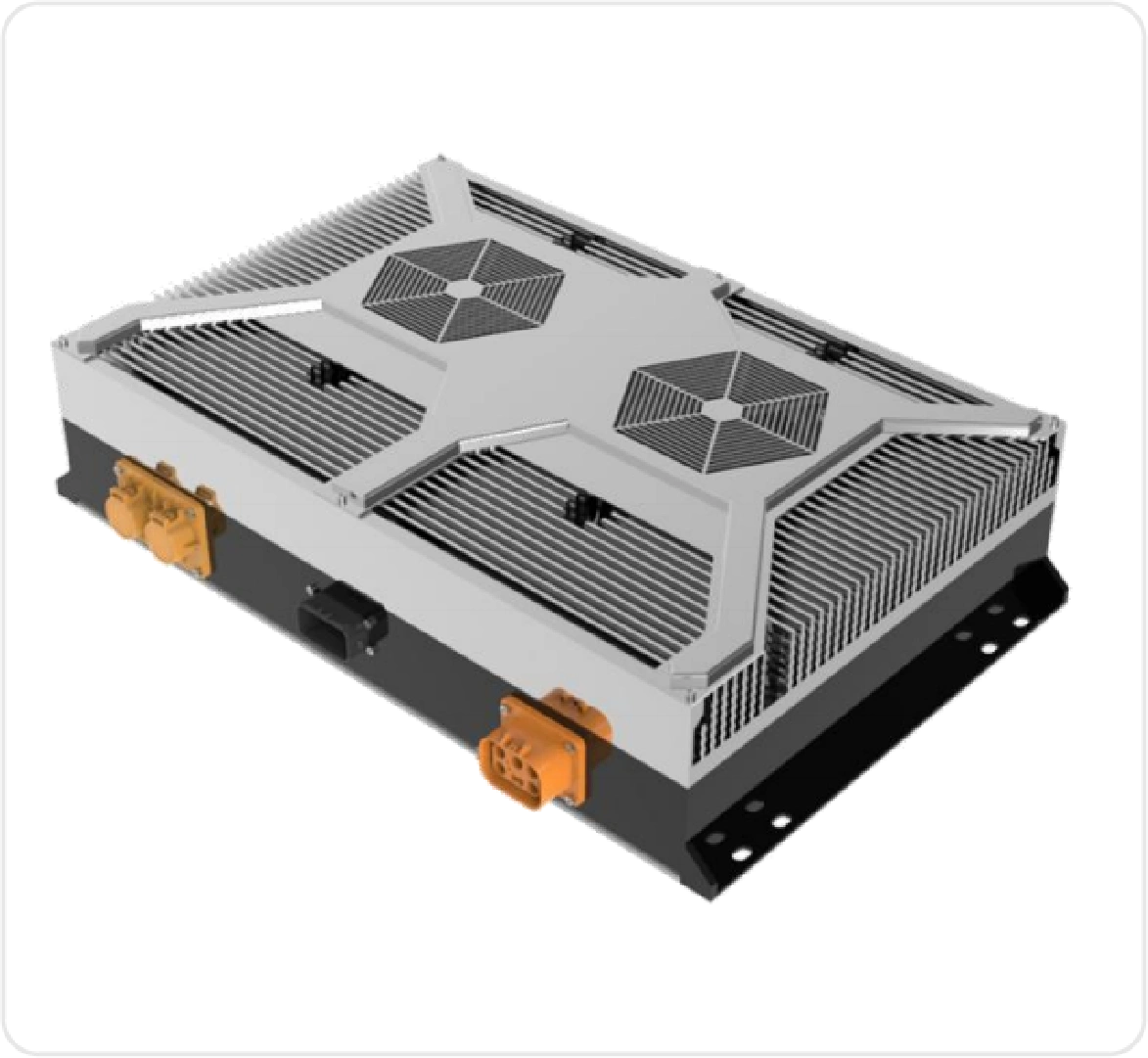
20kW air cooled design ensures efficient thermal management. This 20kW air cooled onboard charger offers IP67 protection and CAN communication for OEMs as a 20kW OBC supplier.
View product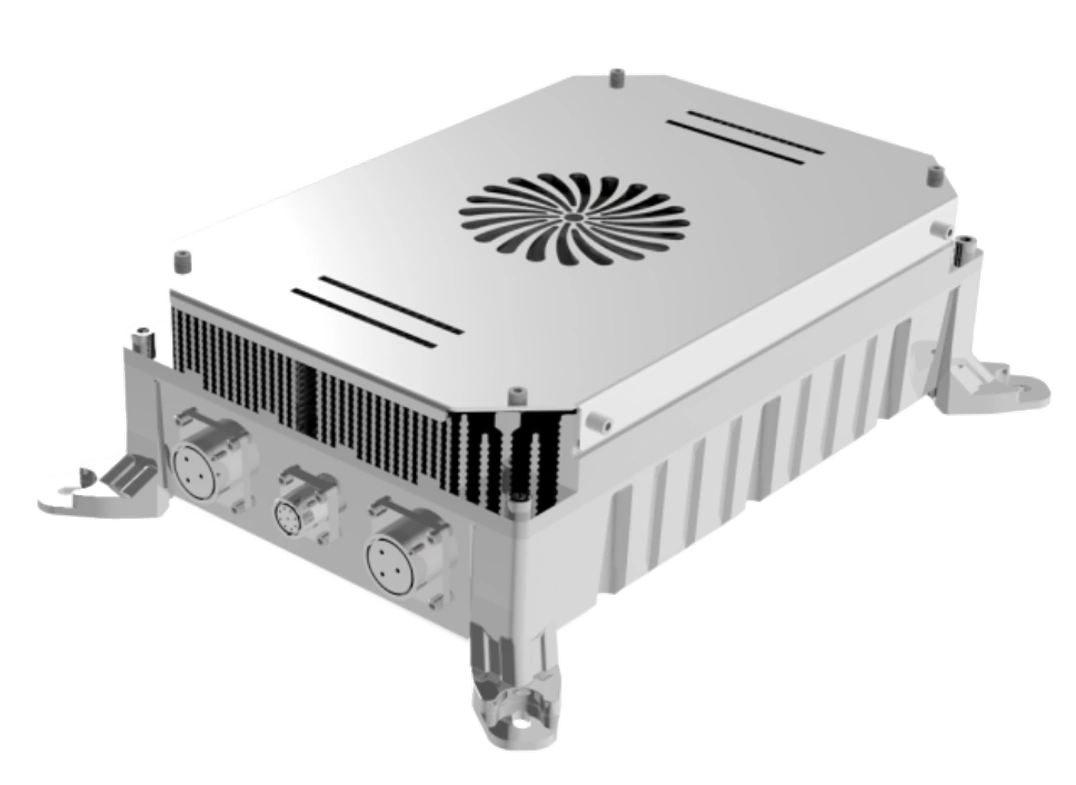
Air-cooled Heat Dissipation with Over-temperature Protection / IP67 Protection Rating Digital Power Supply Full Digital Control Technology Active PFC Full-range Input of 90~290 VAC Electromagnetic…
View productReview the product details, images, and specifications presented on the official product page.
Use the application and use-case information published on the official product page.
Confirm the specifications and options listed for the exact product variant before placing an order.
Check the official product page or ask the supplier about options shown for the selected product.
Use the official contact or inquiry path provided on the site.
Include the product page, intended use, required quantity, and any specifications you need the supplier to review.
