Comprising three core assemblies:
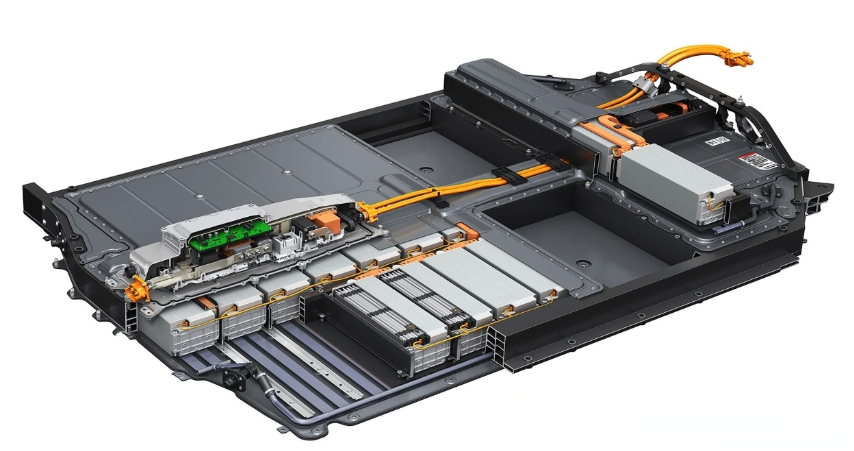
The power battery is the energy source of a new energy vehicle, like the human heart, continuously providing power for the vehicle.
It is generally composed of multiple single batteries connected in series, with a relatively high voltage (e.g., several hundred volts commonly). It is also equipped with a Battery Management System (BMS), which mainly controls the voltage and temperature of individual cells, ensuring the consistency of single-cell voltages to maintain the stability of the vehicle's overall voltage. Most are installed under the chassis, so they have high protection level requirements, usually IP67 or IP68.
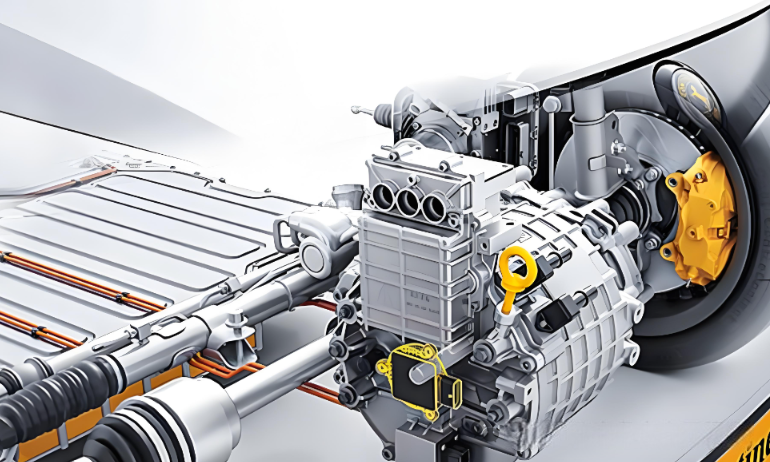
As the "power heart" of the car, the traction motor is a device that converts electrical energy into mechanical energy, providing power for vehicle operation (e.g., moving forward, reversing).
It serves as the power output device of new energy vehicles, equivalent to the engine of traditional fuel vehicles. Based on the law of electromagnetic induction, it efficiently converts electrical energy into mechanical energy to drive the vehicle forward. Permanent magnet synchronous motors are widely used in the new energy vehicle field due to their high efficiency and high power density. Some BYD models equipped with permanent magnet synchronous motors deliver strong power and rapid acceleration, bringing a smooth driving experience to drivers.
The electronic control system is the "neural center" of a new energy vehicle. It coordinates the work of various components such as the battery system, motor, and its control system to ensure efficient operation of the vehicle. It not only processes massive data from various vehicle sensors but also adjusts the vehicle's operating status in real-time according to the driver's intentions.
Regarded as the "intelligent brain" of the motor, its main function is to receive control commands (e.g., speed, torque) from the Vehicle Control Unit (VCU), then accurately control the operating status of the traction motor. This realizes vehicle movements such as low-speed operation, high-speed driving, forward movement, and reversing, ensuring stable and efficient power output.
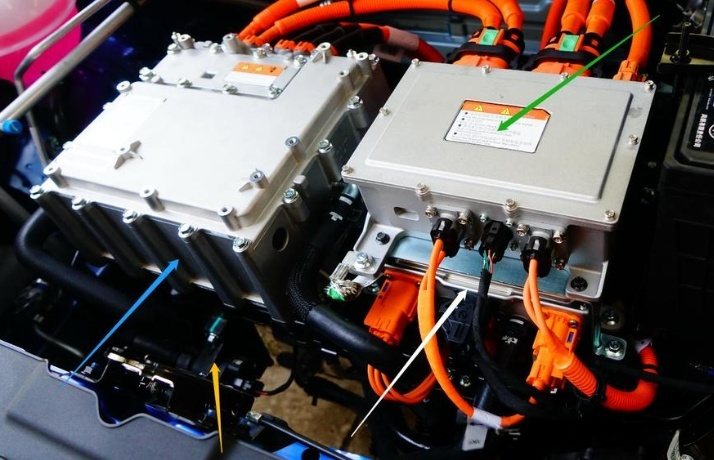
Comprising three core assemblies:
The DC/DC converter converts the high-voltage direct current from the battery into low-voltage direct current required by various on-board electronic devices. It supplies stable power to in-vehicle lighting, entertainment systems, control systems, etc.
It acts like a power distributor, ensuring each electronic device receives appropriate power supply and guaranteeing the normal operation of the vehicle's electronic system.
The OBC is the bridge connecting external power sources and the vehicle battery. It is responsible for converting alternating current into direct current to charge the battery.
Its charging efficiency and stability directly affect the vehicle's charging speed and usability. With technological development, OBCs have become smaller in size but more efficient. Some advanced OBCs can achieve fast charging, significantly reducing charging time and minimizing driver waiting.
The PDU is the core component of the new energy vehicle's high-voltage system, equivalent to the "hub" of power distribution. As the power distribution center, it distributes and manages high-voltage electrical energy from the battery, transmitting it to various high-voltage electrical equipment such as the motor, OBC, and air conditioning compressor.
It also has functions such as overcurrent protection and short-circuit protection to ensure the safe operation of the high-voltage system, acting as a security guard for the vehicle's high-voltage circuit.


